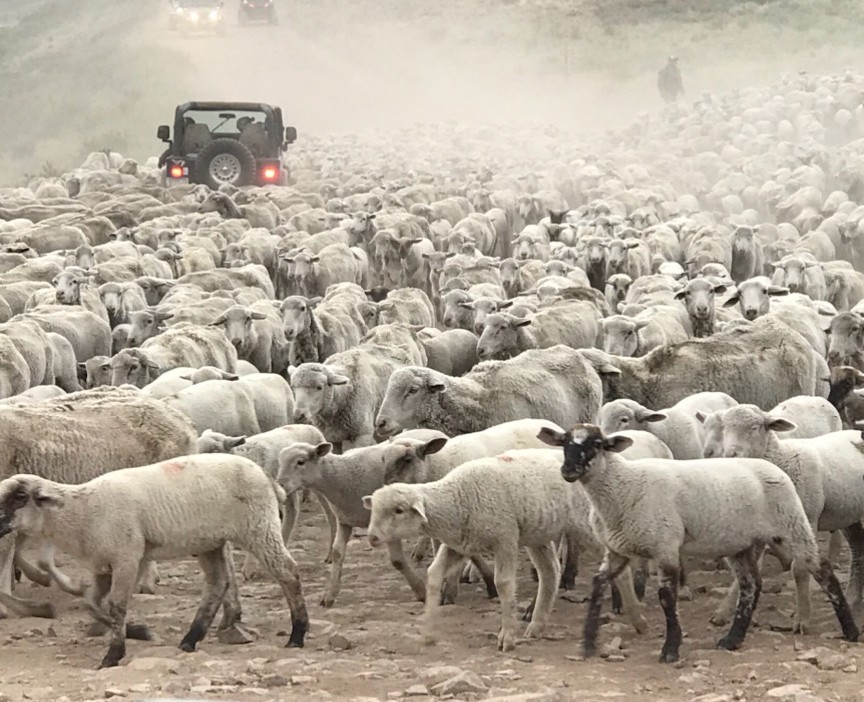
Yes we’re in that Jeep!
“Going against the Crowd as usual.”
You came here for a reason. You’re seeking value and solutions.
You’re probably asking yourself a question:
“Is this DIY Model for real or a hook to get my attention?”
The “DIY” is for Real
The “People & Process Change Model” for DIY Change has been in continual use since 1999 as a very successful internal company change management process. The Model requires no outside resources, no consulting support, no need for extra funding, and no additional personnel. The Model’s concepts and processes are applicable when and where change and improvement is being initiated, reinforced, or supported.
The “People & Process Change Model” is a complete “A-Z Package” of DIY Concepts, Processes, Techniques, and Tools for implementing and supporting change and improvement. The Model’s “Off the Self Ready” processes are easy to understand and appy by a good facilitator or leader with a minimal amount of preparation to understand the logic behind each concept or process. The Model applies a “series of actions” causing work to be performed in a new preferred way.
The Result:
A Change in “Work Habits” to continuously seek change and improvement while applying “Best Practice” processes as an everyday way of performing work.
The Outcome is Simple and Predictable:
Employees with daily routines, behaviors, and habits to seek continuous change and improvement who apply best practice processes will deliver exceptional results.
The Model’s processes “Force Feed, Develop, Reinforce, and Support” continuous change and improvement. Properly implemented and supported the Model develops an agile workforce where change and improvement is the norm not the exception.
The Model relies upon the development and application of a core set of “Key Elements” as a foundation of expectations and requirements for every impacted individual. These Key Elements are universally known, accepted, and validated. You already know, experience, observe, and apply these concepts and processes in your daily life activities. You won’t need to relearn them. The Model explains how to apply the concepts and processes to facilitate acceptance and behaviors to change and improve using best in practice processes.
Is this Model for You?
If you are seeking to make significant changes and improvements in your organization without the need, cost, or interference of outside resources, the DIY Model has plenty to offer. Logically applied the Model will cause your audience to “self-discover” and thereby better accept the need, value, and validity of the very changes you are seeking to implement.
Applying the Model requires only good common sense, simple logic, and human nature. There are no new or complex concepts or theories. The Model simply applies already universally known and long accepted concepts and processes to be facilitated in a series of actions.
The Model has the additional benefit of being applicable for many other applications such as learning, developing, and improving knowledge, skills, and abilities for problem solving, decision making, adult learning, facilitating, coaching, counseling and other improvement processes.
Easy to Understand and to Apply
The Model’s is so basic and simplistic you will discover like hundreds of others before you, “I already know these concepts and processes. I experience them every day.” It begs the question for you, “Why haven’t I used what is so basic, already known and experienced to implement the changes I want in my organization?”
Back in 1999 when the Model was being developed, when we were reviewing our own “Lessons Learned” from a highly successful “Facility Turnaround” change initiative, we found ourselves asking the very same question. As we reviewed the actions taken, we realized we had always known what we had applied, “What had taken us so long?”
The “actions taken” in the “Facility Turnaround” weren’t astounding new discoveries in concept and theory. They instead were so simple, so basic, and so valid, they couldn’t fail. They were very basic and yet they were exceptionally effective, they resulting in spectacular and ongoing improvement.
In this “Facility Turnaround” local management initiated a series of highly unusual and unorthodox actions in an attempt to save a long failing facility from a planned future closure. In a period of only 14 months, the locally driven actions transformed an antiquated “Complete Loser” into a “Superstar Facility” regularly outperforming month after month its 25 “sister” facilities in operational performance.
This DIY Local Implementation was achieved with no outside resources, no new equipment, no new technology, and no increase in budgeted spending. The achievement was accomplished by the same workforce, for the same customers, producing the same products, and at the same volume. The unexpected exceptional results occurred seemingly overnight. This achievement was so dramatic it seemed an impossibility to those outside of the facility raising an immediate question, “Where is the cause and effect? Nothing has changed!”
The Facility’s seemingly impossible overnight success literally “Stunned” Corporate Management and created immediate assumptions, “There’s either some major flaw in the measuring system or the facility is cooking its books!” A prompt formal coporate audit found both assumptions to be wrong and the facility quietly continued to deliver each month ever higher levels of improved performance.
Over the next few months Corporate Management finally realized the facility had indeed changed significantly. The facility had changed in two aspects the corporate leaders had never really considered before. The changes were in employee behavior and in utilizing “Best in Practice” processes. They discovered, the facility changed “its People and its Processes” in how work is to be performed.
Senior Management soon recognized the potential value of implementing similar changes across all facilities. They realized, “If the “Loser” among the facilities could make such significant improvement, consider the potential of applying its concepts to all facilities.”
The facility was formally designated as “The Model Facility” for others to follow and was assigned the task of developing and sharing its new processes and lessons learned. It was the first time local managment paused to consider, “How did our past actions cause such dramatic and ongoing change and improvement?”
The People & Process Change Model
A DIY Model for Managing Change and Improvement
In its effort to understand those underlying reasons and to develop content useful for sharing facility success, it was realized the “series of actions taken” followed a logical “Pathway for Change.” These actions created a new set of employee work routines, behaviors, and habits to apply “Best Practice” processes to seek ongoing change and improvement.
The underlying logic was so elemental as the workforce became “self-driven” to seek change and improvement and used the best processes known for improving performance. Those “early actions taken” initiating the change effort created a compounding effect of applying natural human behaviors with highly effective work processes.
Those “early actions taken” had formed a foundation of “Key Elements” to develop, reinforce, and support ongoing change. Those early actions were not theoretically nor conceptually new concepts or approaches. They simply applied good common sense, simple logic, and basic human nature.
To share these “Processes and the Lessons Learned” these actions were developed into a series of “Experiential Learning Sessions.” Those attending these Learning Sessions would have a similar experience to those in the workforce to the early actions taken. The attendees would have additional learning to understand and discuss the underlying logic of the Lessons. These efforts to create shareable content were the origin of what is today “The People and Process Change Model.”
A Change Model As Effective Today as It Was in 1999
The original Key Elements, Concepts, and Processes have remained basically unchanged and are as effective now as they were in 1999, even in today’s rapidly changing world. The DIY Model’s effectiveness lies in its reliance upon primary human behavior and simple logic, so basic it has remained unchanged for centuries. The Model’s “Cause and Effect” has been present since our ancestors were small groups of hunter gatherers learning to work together to seek continuous change and improvement “in order to survive” and not become extinct.
Still Reading?
If at this point, you’re still interested in learning more about implementing DIY Change, you should read the “Turnaround Story” Page and then review the “People and Process Model” and the “Toolbox Page.” You will better understand the Model’s “Key Elements” and the basics of the concepts, processes, techniques, and tools available for you to use in your own DIY change initiatives.
The “Toolbox” is a work in progress of converting what has in the past been shared “face to face” into usable content for your you to access. It’s also the repository for future content, reference materials, Q&A’s, articles, and useful materials.
Subscribe so you can stay abreast of the site’s ongoing commentary, new and updated content, reader comments, blogs, Q&A’s, reference materials, and any other information we deem worthy of sharing.
We do have a different perspective in our Model different than most of the well know models. We do tend to go against the grain in our approach. We use very similar concepts, but we offer an approach you can implement on your own to “DIY Manage Change” without high cost of other models. We provide concepts and processe you can use in incremental segments to easily apply in very small change initiatives and yet are as applicable to organziation wide and broad scope change.
We have no membership fees and only an expectation for you to learn and perhaps to share your own ideas, comments, questions, and needs with others visiting this site and using the Model.
We’re in Launch Mode
For the next month or so we will be in a “Launch Mode” attempting to fully “build out” the site to convert and refine the past “Face to Face” content into a readable and a downloadable format. We’re finding it to be a formidable task requiring new skills and abilities and we’re “learning on the go” just as we did in the “Facility Turnaround.” It’s another “DIY Effort” and “DIY Learning Experience” to author online content and grasp new website technical skills.
Reach Out Please
Please feel free to reach out to us through the “Inbox” for anything you may need, questions you may have, suggestions you may offer, or a topic you want us to address. This is intended to be an interactive site. We want and need your input to get better and to give you more of what you and others want. We will respond to your inquiries.
Please subscribe and follow us. We’ll let you know of any new or updated materials as they are being added to the website. We won’t bombard you with worthless sales pitches and all the other crap we know both you and we get on a daily basis.
Bear we us please!
We’re Going as Fast as We Can
Thanks for the Visit!